



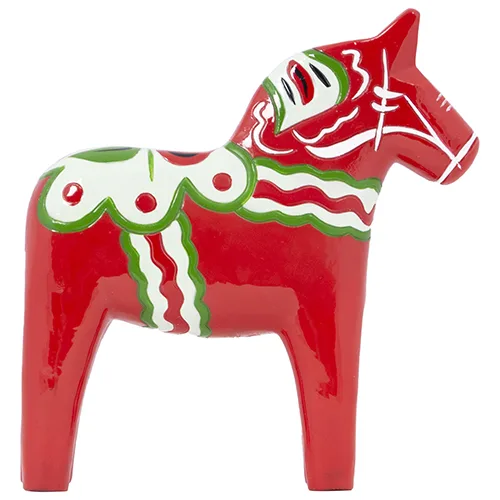
A Dala horse is a small wooden horse, traditionally hand-carved from pine and hand-painted in bright red with decorative kurbits floral patterns. It originated in the Dalarna region of central Sweden and has become the single most recognisable symbol of Swedish folk art worldwide.
Where the Tradition Began
The Dala horse dates back to the 17th and 18th centuries, when woodcutters in the forests of Dalarna carved small wooden toys for their children during the long winters, using scrap wood left over from furniture-making. Over time, the carving style and the bold red paint — originally a cheap, widely available pigment known as Falu red — became standardised into the form recognised today.
Why It Became a National Symbol
The Dala horse’s rise to international fame came at the 1939 New York World’s Fair, where a giant carved horse representing Sweden captured the world’s attention. Since then, it has appeared on everything from postage stamps to merchandise for Sweden’s Olympic team, cementing its status as a symbol of ”Swedishness” in the same way that a maple leaf symbolises Canada.
How to Spot a Genuine One
Genuine, hand-painted Dala horses show slight variations in brushwork — no two are exactly the same. Mass-produced imitations tend to have machine-printed patterns that repeat exactly. Authentic pieces are also typically heavier, carved from solid pine rather than moulded composite material.
Colours and What They Mean
Whilst red is the classic colour, Dala horses are also available in blue, white, black and natural wood finishes. The colour does not carry any strict symbolic meaning today — it is largely a matter of regional workshop tradition and personal taste — but red remains the most historically significant and the most popular choice amongst visitors.
Sizes and Uses
Dala horses range from tiny 5cm versions, perfect as keyrings or ornaments, to large 30cm+ statement pieces designed for a shelf or mantelpiece. Smaller sizes are easy to pack in luggage; larger ones are often sent by post.
The Bottom Line
A Dalarna horse isn’t just a tourist trinket — it’s a three-century-old craft tradition encapsulated in a single object. Whether you’re buying one as a gift or a keepsake, look for the hand-painted detail that links it back to its Dalarna origins.